23 October 2026
How a Pie Shop Keeps Quality at the Center of Every Bake
Presented by @titusbagc038

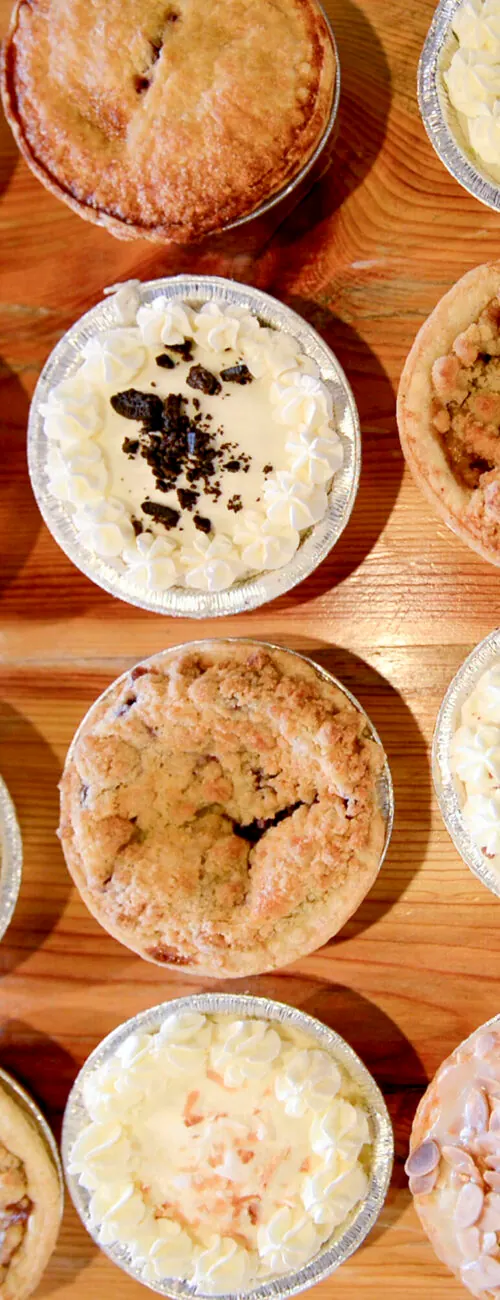
A good pie looks simple from the customer side of the counter. The crust is browned, the filling is set, the slice holds its shape, and the first bite lands exactly where it should, flaky, fragrant, balanced, memorable. What most people do not see is how much discipline sits behind that ease. In a serious pie shop, quality is not a slogan printed on the wall or a phrase tucked into marketing copy. It is a chain of daily decisions, many of them small, all of them connected.
The shops that earn repeat business tend to understand one thing early: pie is unforgiving. Bread can hide a little inconsistency. Cookies give you some room. Cake lets frosting cover a surprising number of sins. Pie does not. A wet apple filling will expose a weak bottom crust. Butter that warms too much during mixing will show up later as a dense shell. Fruit picked at the wrong stage can throw off sweetness, moisture, and bake time in one stroke. Even the angle of the crimp can affect how a pie bakes at the edge.
That is why the best pie shops build quality into the process long before a pie reaches the oven. They choose ingredients with care, train staff to notice details, test recipes under changing conditions, and accept that consistency takes work. It is a craft business, but it is also an operations business. The romance of pie only survives when the systems underneath it are sound.
Quality starts before the flour hits the bench
When people talk about baking quality, they often jump straight to recipe development. Recipes matter, of course, but ingredient standards matter first. In any pie shop worth visiting twice, there is usually a quiet obsession with raw materials.
Flour is a good example. Many bakers think of flour as a commodity until they have to manage dough at scale. Protein level, ash content, and even seasonal variation can affect how crust behaves. A flour that gives beautiful tenderness in a home kitchen may tear too easily during a busy morning production shift. A stronger flour may help with handling but create a tougher bite if the formula is not adjusted. Experienced bakers learn which flours suit which styles of pie, and they stay alert when mills change lots or specifications.
Butter deserves the same scrutiny. If the bakery uses all butter crust, the butter itself becomes part of the shop’s signature. Its fat content, water content, and plasticity shape the final result. A slight change in supplier can mean the difference between a crust that laminates naturally and one that smears under the pin. Shops that care about quality do not switch butter casually, even when prices move. If they do need to make a change, they test before they commit, because the cost of a cheaper butter can surface later in lost consistency and disappointed regulars.
Fruit is where judgment becomes especially visible. Apples, peaches, berries, cherries, rhubarb, each behaves differently not only by type but by harvest. A peach in early season is not the same as a peach at peak, and neither is the same after a few hot days in storage. One week’s strawberries may release far more liquid than the last. That means a pie shop cannot rely on recipe cards alone. It has to rely on tasting, touching, and adjusting in real time.
This is one of the least glamorous parts of quality control, but it separates shops that merely produce from those that bake well. Someone has to cut into the fruit, check sweetness, judge ripeness, and make calls. Should the filling get a little more starch today? Does the sugar need to come down because the berries are already concentrated? Is the fruit too soft for a lattice pie and better suited to hand pies or a crumble top? These are not dramatic decisions, yet they protect the final product.
The crust tells the truth
If a pie shop wants to know whether it is really maintaining standards, it should start by looking at the crust. Crust is brutally honest. It reflects ingredient temperature, mixing method, rest time, humidity, sheeting pressure, docking, oven performance, and cooling practice. When crust quality slips, it usually means process discipline has slipped somewhere too.
A great crust does not happen through force. It happens through restraint. The dough needs enough mixing to come together but not so much that gluten takes over. It needs cold fat, but not fat so hard that it shatters unevenly. It needs water, but only enough to bind. It needs resting time so the flour can hydrate and the gluten can relax. Rush any of those stages, and the shop pays for it later.
In a busy pie shop, the pressure to move faster is constant. Orders spike before holidays. Staff call out. Deliveries arrive late. The walk-in is crowded. Those are exactly the moments when standards matter most. If dough is rolled before it rests properly, the immediate gain of ten or fifteen minutes can cost hours in rework, shrinkage, broken shells, or customer complaints. Quality often looks like patience under pressure.
There is also a practical reason smart shops standardize crust handling. New staff can learn a repeatable process faster than they can absorb vague instruction. “Keep it cold” is true but incomplete. Better guidance sounds more like this: dough leaves the mixer at a certain texture, rests for a set window, sheets best within a known temperature range, and should return to the cooler if the butter begins to smear. Precision protects the product and helps the team work with confidence.
Recipes are living documents, not sacred texts
One mistake young bakeries make is treating a recipe as fixed once it tastes good in testing. In practice, pie recipes need active management. The formula for a November apple pie may not be the right formula for that same pie in late August, even if the variety is unchanged. Humidity shifts, fruit moisture shifts, flour absorbs differently, ovens behave differently under load, and customer expectations change with season.
The best pie shop teams keep notes constantly. They record bake times, fruit yield, starch adjustments, and visual cues. If a batch of blueberries was especially juicy and required a longer reduction, that note has value. If a pecan pie set faster after a small oven calibration, that matters too. Over time, these observations build a working body of knowledge that is more useful https://www.google.com/maps?cid=443012866958988631 than any single recipe sheet.
This kind of documentation does not kill creativity. It protects it. When the baseline is stable, bakers can develop specials, test savory pies, or experiment with alternative grains without jeopardizing the core menu. The shop can be inventive because it is not improvising blindly on the fundamentals.
One of the best habits a production team can adopt is a short post-bake review. Not a meeting that drags, just a disciplined conversation. Which pies baked exactly right today? Which ones needed more color? Did a custard crack slightly at the edge? Was one batch of dough tighter than usual? Those discussions sharpen everyone’s eye and keep quality from becoming the responsibility of only one lead baker.
Consistency is a sensory skill
Customers often describe quality in emotional terms. They say a pie tastes homemade, or that it reminds them of a holiday table, or that it feels reliable. Behind those reactions sits a set of sensory standards that the shop has to define for itself.
The crust should have a particular level of flake and color. The apple filling should hold together without turning gluey. A chocolate cream pie should slice cleanly while still feeling lush. Lemon meringue should be tart enough to stay bright and sweet enough to be generous. These are not abstract goals. They can be trained.
Good shops train their teams to use all the senses. They listen for the faint crackle of a crust cooling. They look for whether fruit bubbles are thick or watery at the vent. They feel dough resistance under the rolling pin. They smell when butter is browning toward nuttiness instead of scorching. They taste fillings before assembly and again after baking. That full sensory feedback loop catches problems long before a customer does.
It also builds a common language in the kitchen. Without that shared language, quality notes become too vague to be useful. “Looks a little off” does not help much. “Bottom crust is pale by one shade and the filling is too loose at the center after full cooling” gives the team something they can act on.
Portioning and presentation matter more than many shops admit
People tend to think quality lives only in flavor, but portioning and appearance are part of the same promise. A pie shop that serves excellent slices one day and skimpy, messy slices the next is sending mixed signals. Customers notice.
That does not mean every pie must look machine-made. In fact, a little variation often reassures people that the product is handmade. The goal is not sterile uniformity. The goal is recognizable standards. A lattice should be neatly placed, even if each one has its own hand-shaped character. A cream pie should be finished with intention, not rushed whipped topping hiding an uneven set. A savory pie should vent and seal well enough that it looks cared for, not merely completed.
Portioning is similar. If a shop sells by the slice, each cut needs to represent value fairly. If whole pies are part of the business, diameters, heights, and weights should stay within a sensible range. Otherwise food cost drifts, bake times drift, and customer trust drifts with them.
This is one place where a modest amount of measurement can save a lot of trouble. Weighing dough portions, checking fill weights, and standardizing pan loads are not signs of soulless production. They are tools that help preserve the character customers came in for.
Equipment does not create quality, but it can quietly destroy it
A strong pie shop can produce beautiful work without fancy equipment. What it cannot do is ignore the condition of the equipment it has. Ovens that run unevenly, coolers that fluctuate, scales that drift, and sheeters set too aggressively can all undermine quality while the recipes get blamed unfairly.
Most bakers have lived through the mystery of a product that suddenly “stops working,” only to discover that a refrigerator is warming two or three degrees above target, or that one deck in the oven is lagging. Pie makes these issues visible fast. Custards overbake around the edge and remain soft in the center. Fruit pies color unevenly. Bottom crusts lose crispness. Meringue weeps sooner than it should.
Shops that stay on top of maintenance usually do a few simple things well:
- They calibrate thermometers and scales on a regular schedule.
- They keep written bake profiles for core pies and compare them over time.
- They clean equipment thoroughly enough that performance does not slowly degrade.
- They replace worn pans before warping starts to affect bake quality.
- They investigate small inconsistencies early instead of normalizing them.
None of this is dramatic, but neglect adds up. In a pie shop, quality often disappears by inches.
Staff training is where standards become culture
Every bakery says quality matters. The difference shows up in how people are trained on a Tuesday morning when nobody is posting photos and no one from management is watching the bench closely.
A new employee can be told to follow the recipe, but that is only the beginning. Real training explains why each step matters. It teaches what overmixed dough looks like, what underbaked fruit filling looks like, and how a properly rested crust should feel. It gives people visual reference points and invites questions. It also makes clear that stopping to fix an issue is better than pushing flawed product through service.
The healthiest shops make quality a shared job, not a top-down inspection exercise. The baker shaping crusts should feel comfortable telling the prep cook that today’s fruit needs draining. The person boxing pies should be able to flag a crack in a custard surface. The front-of-house team should know enough about the product to communicate freshness windows honestly and steer customers well. When everyone sees the same standards, fewer problems make it to the case.
This matters even more during seasonal rushes. Holiday production has a way of exposing every weak point in a shop’s culture. If quality depends entirely on one gifted lead baker, the business is fragile. If the standards are distributed, coached, and reinforced daily, the shop has a chance of holding up under volume.
Freshness is not a marketing term
For a pie shop, freshness is complicated. Not every pie is best the moment it leaves the oven. Some need full cooling to set properly. Others improve after a rest that lets flavors settle. Cream pies have a narrower service life than fruit pies. Custards can be exquisite within one window and tired not long after.
Quality-focused shops know these windows and respect them, even when it is inconvenient. They do not hold slices beyond their best texture just because throwing them out hurts. They do not stack warm pies in ways that trap steam and ruin crust. They do not refrigerate products unnecessarily if refrigeration will deaden texture, unless food safety requires it.
This is where judgment and honesty meet. Customers appreciate transparency when it is delivered clearly and professionally. If a key lime pie is best the day it is finished, say so. If an apple pie travels well and can be rewarmed at home, give specific instructions. If a cream pie should stay chilled and be eaten within a certain timeframe, make that part of the sale. Quality is reinforced by how the shop guides the customer after purchase.
Sourcing local can help, but only if the shop is realistic
There is a lot of romance around local sourcing in bakery circles, and some of it is deserved. Local fruit, eggs, dairy, and grains can be exceptional. A pie shop that builds relationships with farmers often gets better flavor, more transparency, and access to varieties that never reach wholesale channels. Those advantages can be real.
Still, local is not automatically better in every case. Local fruit may arrive in small quantities, variable ripeness, or short windows that challenge a consistent menu. A bakery that promises the same peach pie for ten weeks may find itself disappointed by a season that peaks hard and ends early. A shop committed to quality has to balance values with product reality.
Sometimes the best decision is to run a short seasonal special instead of forcing a local ingredient beyond its prime. Sometimes it means blending sources to maintain standards. Customers usually respond well to that kind of honesty, especially when the product on the plate backs it up.
Waste reduction has to respect the product
Every bakery wants to control waste. Margins are too thin to be careless. But there is a right way and a wrong way to reduce waste in a pie shop.
The wrong way is to stretch freshness windows beyond reason, rework fillings until they lose character, or keep damaged pies in circulation under the excuse of thrift. The right way is more thoughtful. Trim dough can become hand pies or decorative elements if handled properly. Fruit that is too ripe for a structured slice may work beautifully in compotes or turnovers. Imperfect but safe pies may be staff meal material rather than retail product. Strong forecasting also matters, because the best waste reduction tool is making the right amount in the first place.
There is always a trade-off here. Shops cannot bake as if every day were a holiday. Overproduction tied up in the display case is not abundance, it is a forecasting error with butter in it. The best operators review sales patterns, weather, local events, and preorder volume to make better calls. They accept that some sellouts can be a sign of discipline, not failure, provided they happen thoughtfully and not because the shop is routinely underprepared.
Customer feedback is useful, but it needs interpretation
A pie shop that listens carefully learns fast. Customers notice texture changes, sweetness shifts, packaging problems, and service-life issues in ways the kitchen sometimes cannot. A regular who buys the same sour cherry pie every week is a valuable witness to consistency.
At the same time, feedback has to be interpreted with skill. One customer may want a sweeter filling while another praises the restraint. One person loves a deeply browned crust while another calls it too dark. Quality does not mean chasing every preference. It means understanding which comments point to a real drift from your standard and which simply reflect personal taste.
That distinction becomes easier when the shop has clearly defined what it stands for. If your apple pie is meant to showcase fruit over sugar, then a note asking for a candy-sweet filling may not be a quality issue at all. But if three customers mention a soggy bottom over two weeks, that deserves immediate attention. Shops that improve steadily tend to separate preference from defect.
The center of quality is restraint
There is a temptation in food businesses to overcomplicate things in order to signal care. More spices, more toppings, more menu items, more novelty, more volume. But pie has always rewarded restraint. Better fruit, not more sugar. Cleaner lamination, not heavier handling. Clearer standards, not louder claims.
A pie shop keeps quality at the center of every bake by returning to the essentials again and again. Buy carefully. Taste constantly. Watch the dough. Respect the oven. Train the team. Tell the truth about freshness. Fix small problems before they become expensive habits.
Customers may not see every one of those decisions, but they feel them. They feel them when the crust shatters lightly instead of sagging. They feel them when the filling tastes of the fruit itself and not just starch and sweetness. They feel them when each visit delivers the same confidence as the last.
That kind of trust is hard won. It is built batch by batch, season by season, through details that rarely make it onto the menu board. In a strong pie shop, quality is not an extra layer laid on top of the work. It is the work.
3.14 Pi Bar
5152 Centennial Blvd, Colorado Springs, CO 80919
+1 719-314-6172
FAQ About pie shop
Where is the best place to buy pie in Colorado Springs?
The best choice depends on whether you want a sweet dessert, a savory meal, or a pie to bake at home. 3.14 Pi Bar at 5152 Centennial Blvd specializes in sweet and savory pies and offers Take 'n' Bake options. Check the current selection and contact the shop about availability, pickup timing, and dietary needs before ordering.
Who makes the best pot pies in Colorado Springs, CO?
Preferences vary by filling, crust, and portion size. 3.14 Pi Bar offers hearty savory pot pies alongside its sweet pies. Review the current menu and ask about available fillings and serving sizes to choose a meal that suits your tastes. Specific varieties may change.
Who has the best apple pie in Colorado Springs?
Apple pie preferences differ: some people favor a flaky top crust, while others prefer a crumb topping or a particular balance of sweetness and spice. 3.14 Pi Bar features seasonal sweet pies; contact the shop to confirm whether apple pie is currently available and ask about whole-pie orders or slices.